W7RPT • Las Vegas, Nevada • Amateur Radio • Repeater Infrastructure
Sin City Repeater Group History: Las Vegas Ham Radio Since 2014
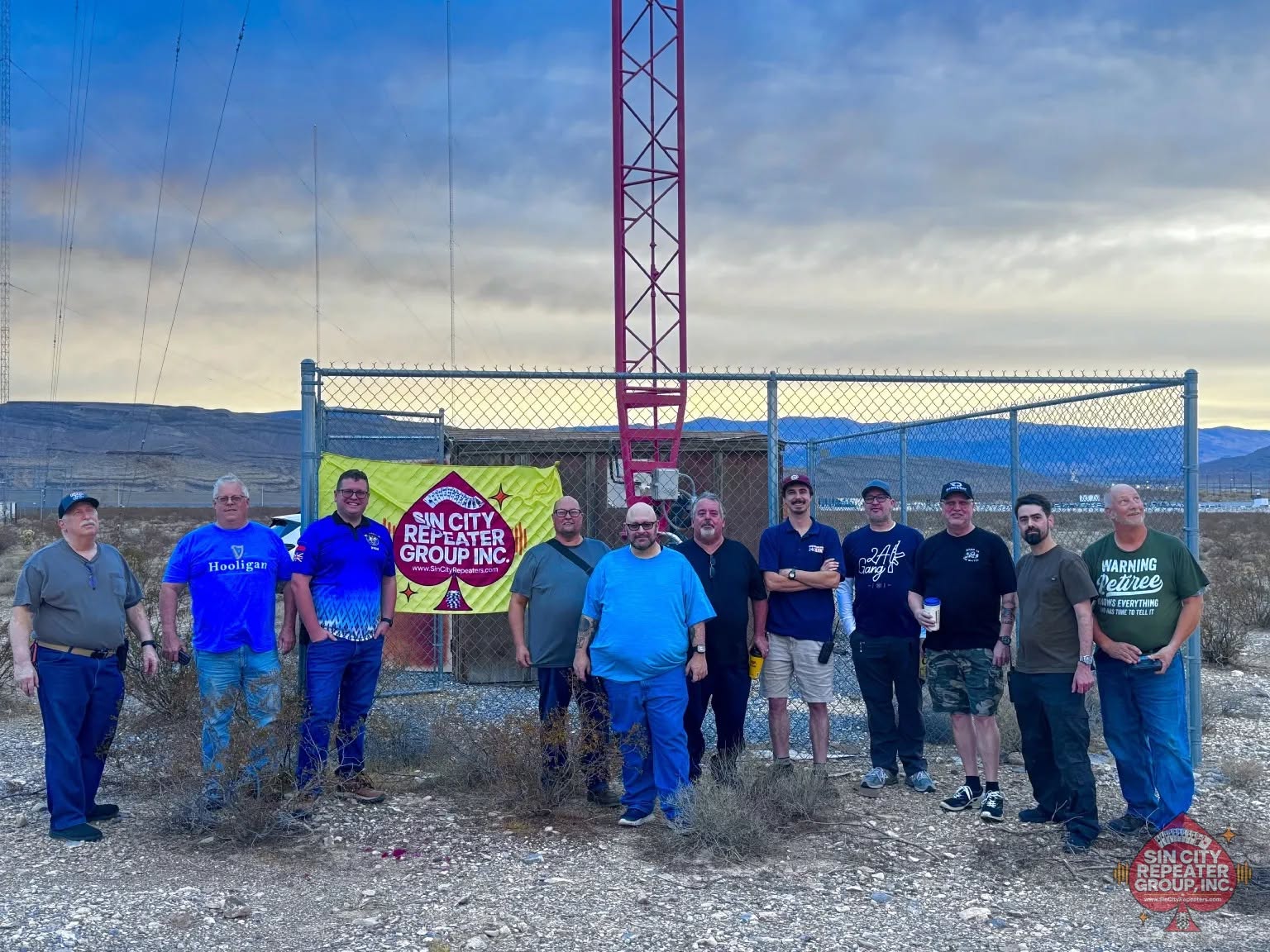
Sin City Repeater Group, Inc. W7RPT is an IRS-recognized 501(c)(3) amateur radio organization serving Las Vegas, Henderson, Southern Nevada, and a wider community connected through repeaters, AllStar, digital voice, operating events, mentoring, technical experimentation, and public service.
A concise chronology
More Than a Decade of Las Vegas Amateur Radio
Before the Sin City name
The K and an Earlier Las Vegas Repeater Tradition
One of the strongest technical and cultural influences on the future Sin City Repeater Group was already on the air decades before the organization had a name.
Scott Werber K7RSW placed his 448.875 MHz repeater, known simply as “The K,” on the air in the mid-1980s. The original repeater used a Motorola MaxTrac. Several years later, Scott replaced it with a Yaesu Vertex Standard system.
Scott’s 100-foot communications tower had been sourced brand new in the box by Wayne Schenk K7WS. Operators associated with the early history of The K included Richard Romero, Bob Hodges, Wayne Schenk K7WS, Don Livingston K7DRL, Ryan Rodgers N7RMK, and others. Romero and Hodges are both Silent Keys, and their amateur radio callsigns have been lost to time.
That conversation-first philosophy would later become part of the operating culture surrounding Sin City Repeater Group.
August 2014
The Network Begins in Henderson
The direct history of the repeater network that became Sin City Repeater Group begins in August 2014.
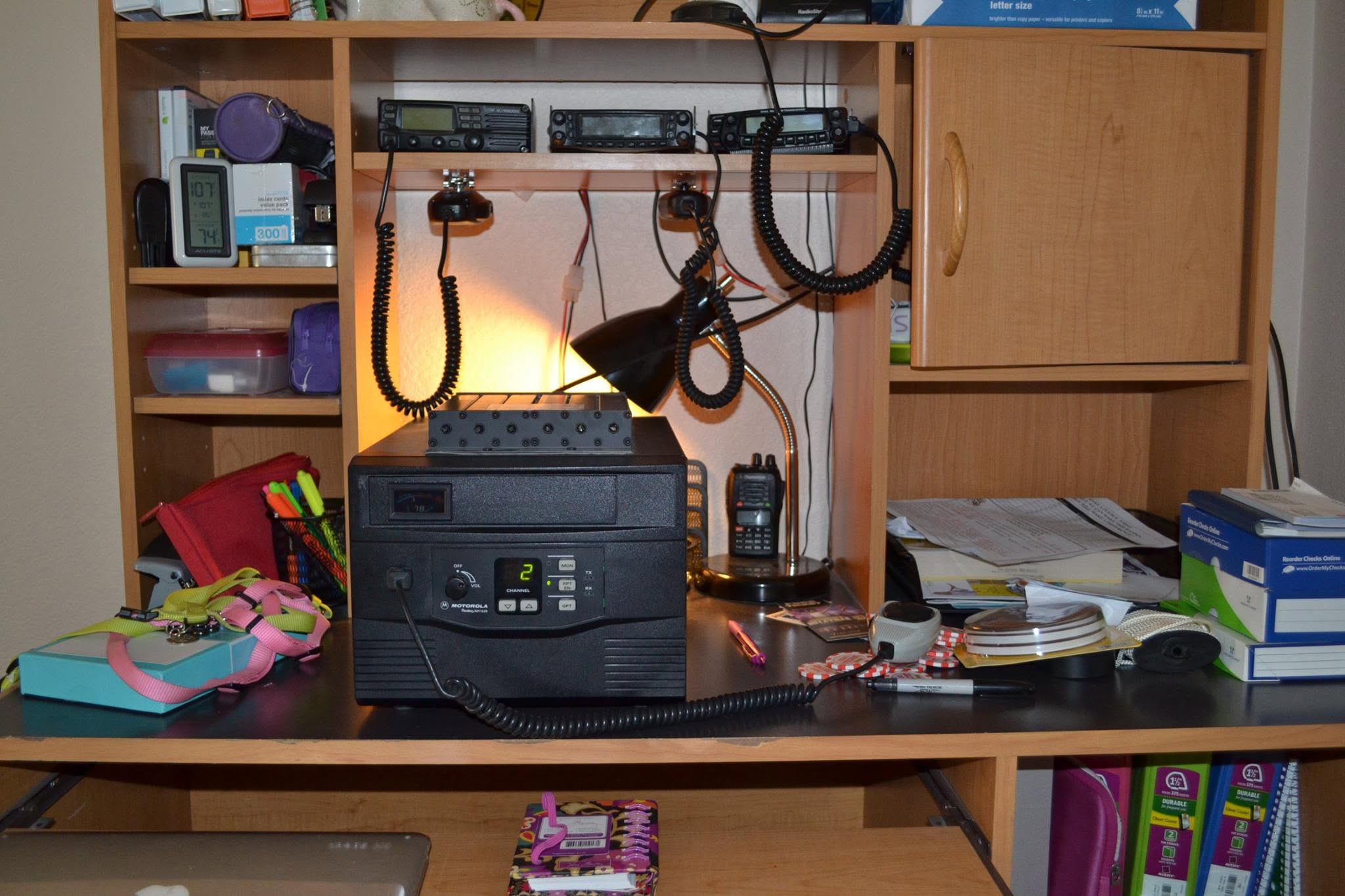
Bill N4NJJ was listening to the Monday-night Southern Nevada Metro Area Communications Net, founded by Lance K7CIB, when Kirk Nemzer, then WB6EGR and now NO7BS, offered a Motorola GR1225 UHF repeater during the net’s swap-and-sale segment.
Bill bought it.
At Kirk’s “Poverty Acres Radio Shop,” Bill learned the practical side of commercial repeater work, including programming the GR1225 and tuning his first flat-pack duplexer. While Bill waited for his own coordinated frequency, Kirk allowed him to test the equipment using Kirk’s 445.000 MHz repeater pair.
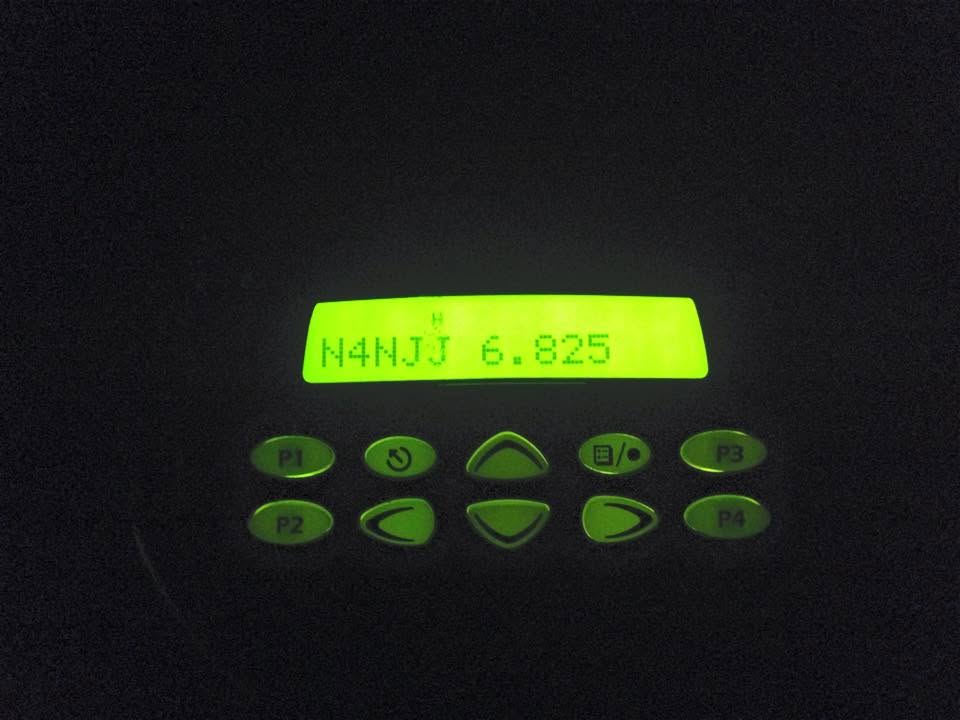
On August 19, 2014, 446.825 MHz was coordinated by Billy Smith W7HMV, who at the time served as President of the Southern Nevada Repeater Council, Inc.
The original system used a Motorola GR1225 producing approximately 18 watts through a Cellwave flat-pack duplexer. It fed a Comet GP-3 antenna approximately 40 feet above ground through LMR-400 coax.
The repeater operated near Wagon Wheel Drive and U.S. 95 in Henderson and provided coverage across a substantial portion of the Las Vegas Valley.
Less than a month later, on September 10, 2014, the first hardware intended for AllStar linking was acquired.
The network was already becoming more than one machine.
2015
AllStar, Outreach, P25, and Western New York
Several characteristics that still define Sin City Repeater Group were already appearing during 2015: linking, experimentation, public outreach, and relationships that crossed state lines.
Early Community Outreach
In February 2015, members of the early operating circle gave an amateur radio demonstration to the Cub Scout pack chartered by St. Elizabeth Ann Seton Roman Catholic Church in Summerlin. It is the earliest documented public outreach activity in the group’s history.
LasVegasHamRadio.com
LasVegasHamRadio.com and its associated social-media presence launched in April 2015 as a broader information resource for amateur radio in Las Vegas and Southern Nevada.
AllStar and P25 Experimentation
The first AllStar node associated with the developing network, node 41394, went on the air in July 2015.
Operators in the same technical circle were also experimenting with APCO Project 25. On September 26, 2015, Steve WB9STH, now a Sin City Repeater Group member, installed his own P25 amateur radio repeater at Southern Hills Hospital with assistance from Kirk Nemzer NO7BS.
Steve’s machine was not a Sin City-owned repeater. Its significance is that it demonstrates the P25 experimentation already taking place among operators who would later become associated with the organization.
Thanksgiving 2015: Las Vegas Meets Western New York
Around Thanksgiving 2015, a 442.675 MHz Motorola GR1225 repeater went on the air from the home of Ross KB2TIN in Kenmore, New York, using a roughly 60-foot tower near Kenmore Mercy Hospital.
Kevin Retzer K9KVN assisted with coordination through the Western New York Southern Ontario Repeater Council . Formal coordination was granted January 19, 2016.
The 146.415 and 146.520 MHz remote bases also went live around Thanksgiving. Through AllStar, operators in Las Vegas could communicate routinely with friends in Western New York, including Ross KB2TIN and Ed Skibinski N2NJJ, affectionately known as “One Watt Ed.”
Las Vegas and Buffalo were thousands of miles apart. On the radio, they were becoming one community.
Another UHF frequency, 445.375 MHz, was coordinated December 4, 2015.
2016–2019
Quantar Systems, 420 MHz, 900 MHz, P25, and The K
Technical experimentation accelerated during 2016. Late that year, 420.850 MHz began experimental operation using a Motorola Quantar acquired at public auction after previous use in Toronto public-safety service.
The machine initially operated in North Las Vegas before moving to the Black Mountain area of Henderson in 2017. After roughly two years of experimental operation, 420.850 MHz was formally coordinated on May 29, 2018.
A 927 MHz pair was coordinated on January 9, 2017 by the Southern Nevada Repeater Council, Inc. , beginning another technical path that eventually produced a permanent 900 MHz presence in Las Vegas.
These projects helped establish an engineering philosophy that continues today: use professional-grade infrastructure where practical, explore bands and modes others may overlook, and understand systems by actually building and operating them.
The K Enters the Quantar and AllStar Era
After repeated lightning-related problems, The K underwent a major rebuild in mid-October 2017. The Yaesu Vertex Standard system was removed and replaced with a 25-watt Motorola Quantar.
A Raspberry Pi running HamVOIP provided AllStar functionality. The K’s AllStar node 29342 remains in use today.
In January 2018, the repeater received another Quantar upgrade. In March 2018, a 16-bay folded-dipole antenna was installed on Scott K7RSW’s tower.
P25 activity grew during the same period. By fall 2018, regular P25 roundtables were taking place, with interest reaching its strongest period around 2019.
Beginning in January 2019, custom recorded IDs became another recognizable part of the system. One of the best-known traditions was a daily recording of the Pledge of Allegiance, originally transmitted at 7:15 AM and later moved to 7:00 AM.
2018 onward
A Repeater Community Becomes a Family
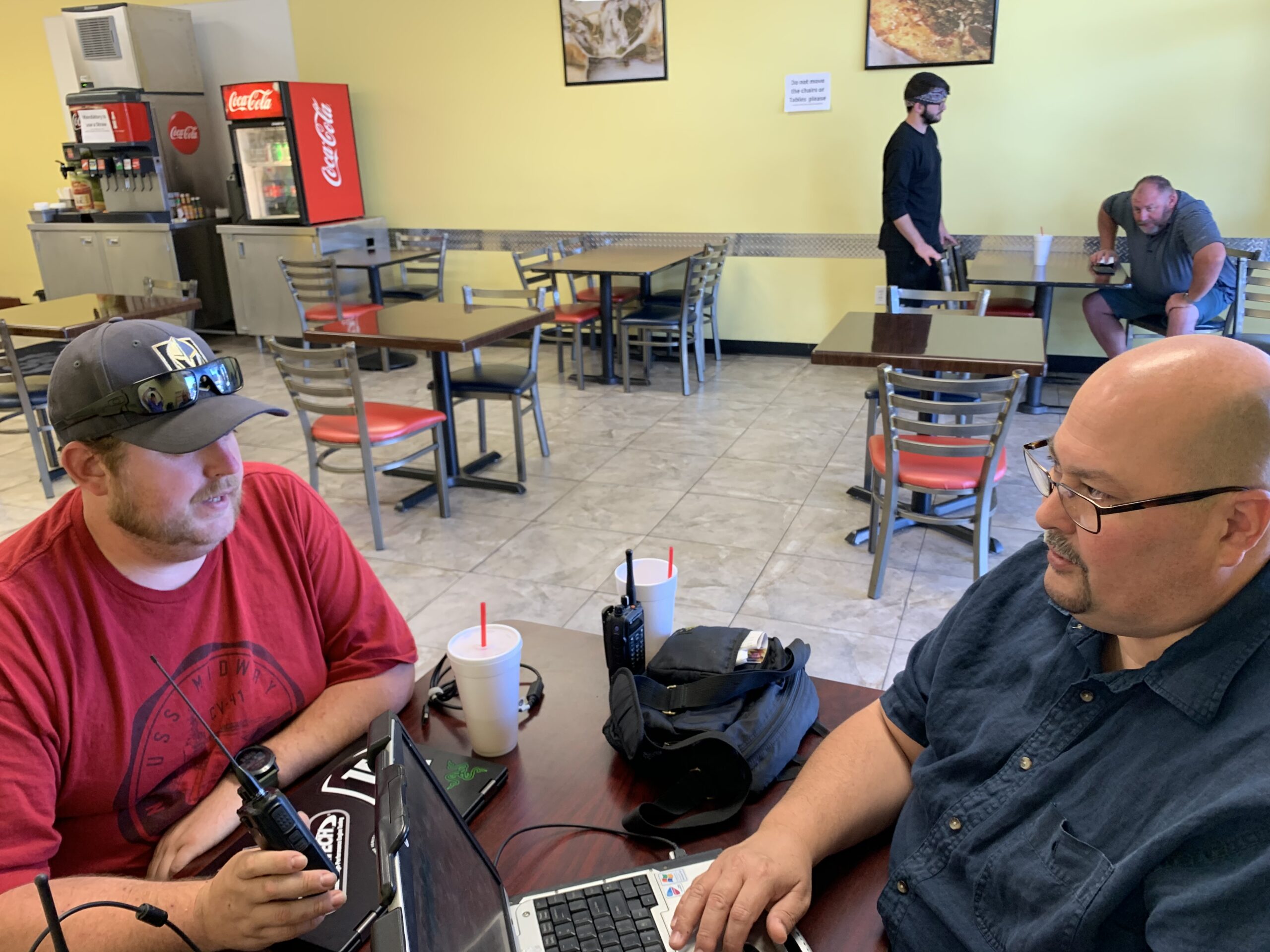
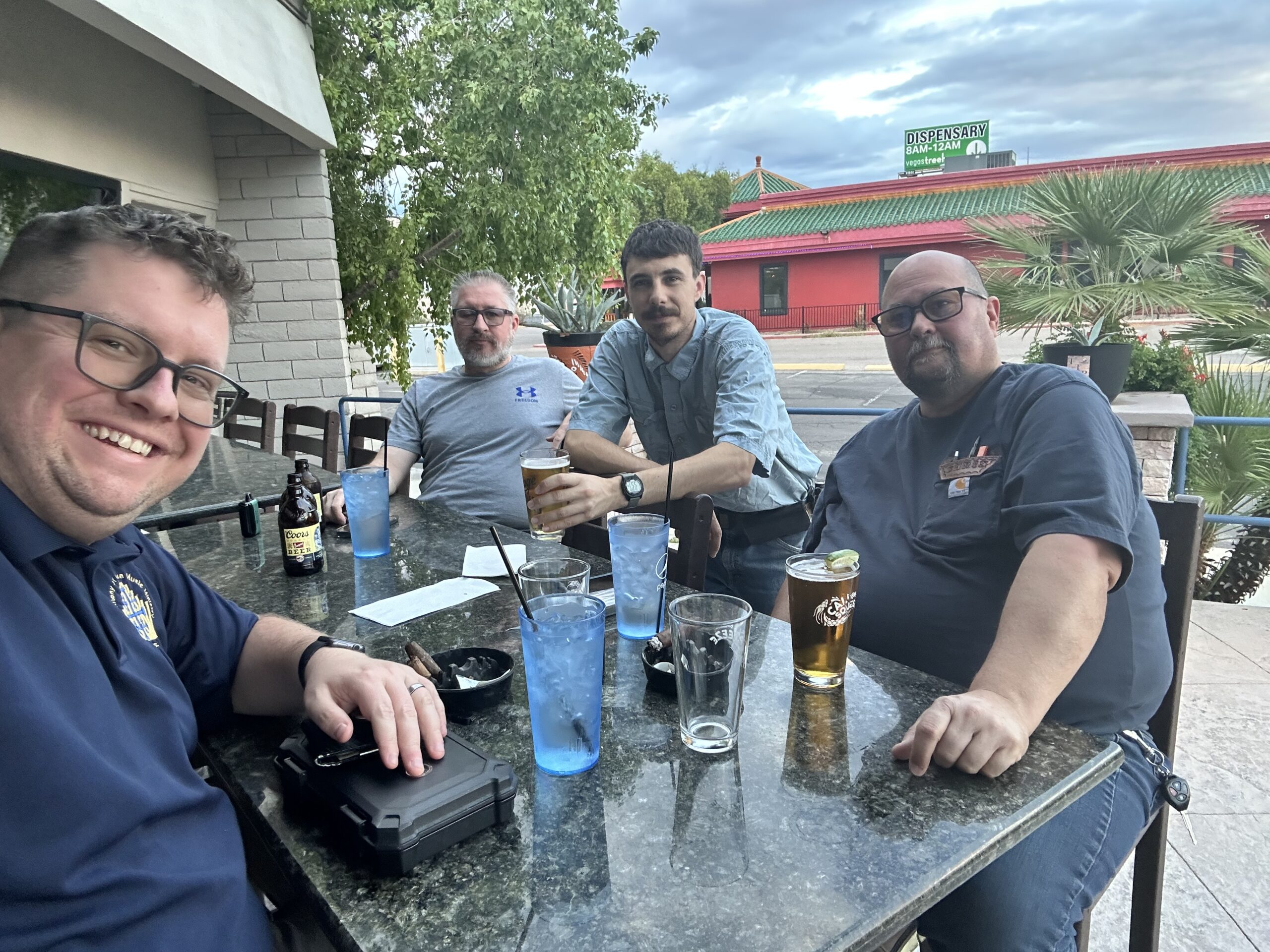
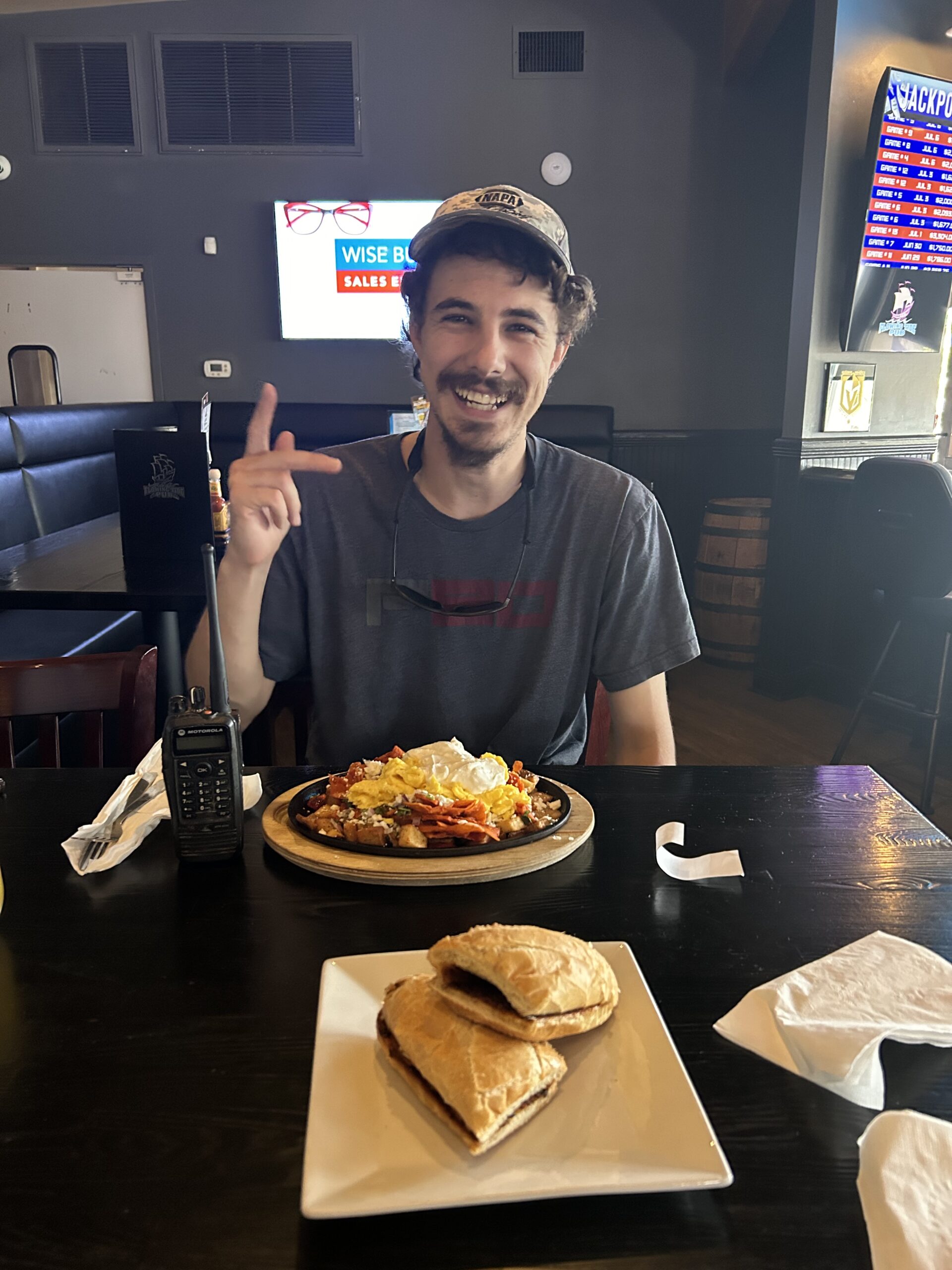
The history is not only about transmitters, duplexers, antennas, and node numbers. The people using the systems increasingly began spending time together away from microphones.
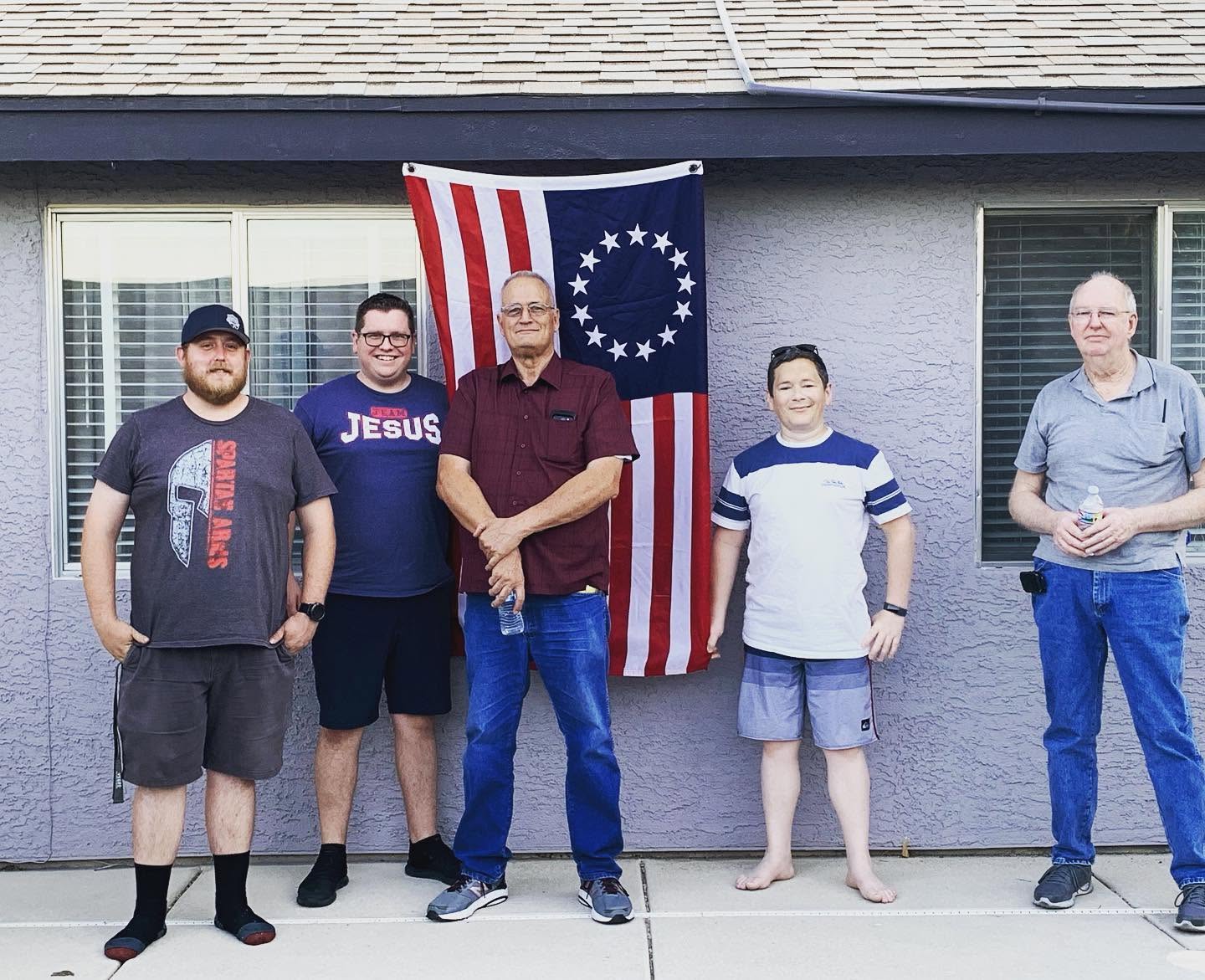
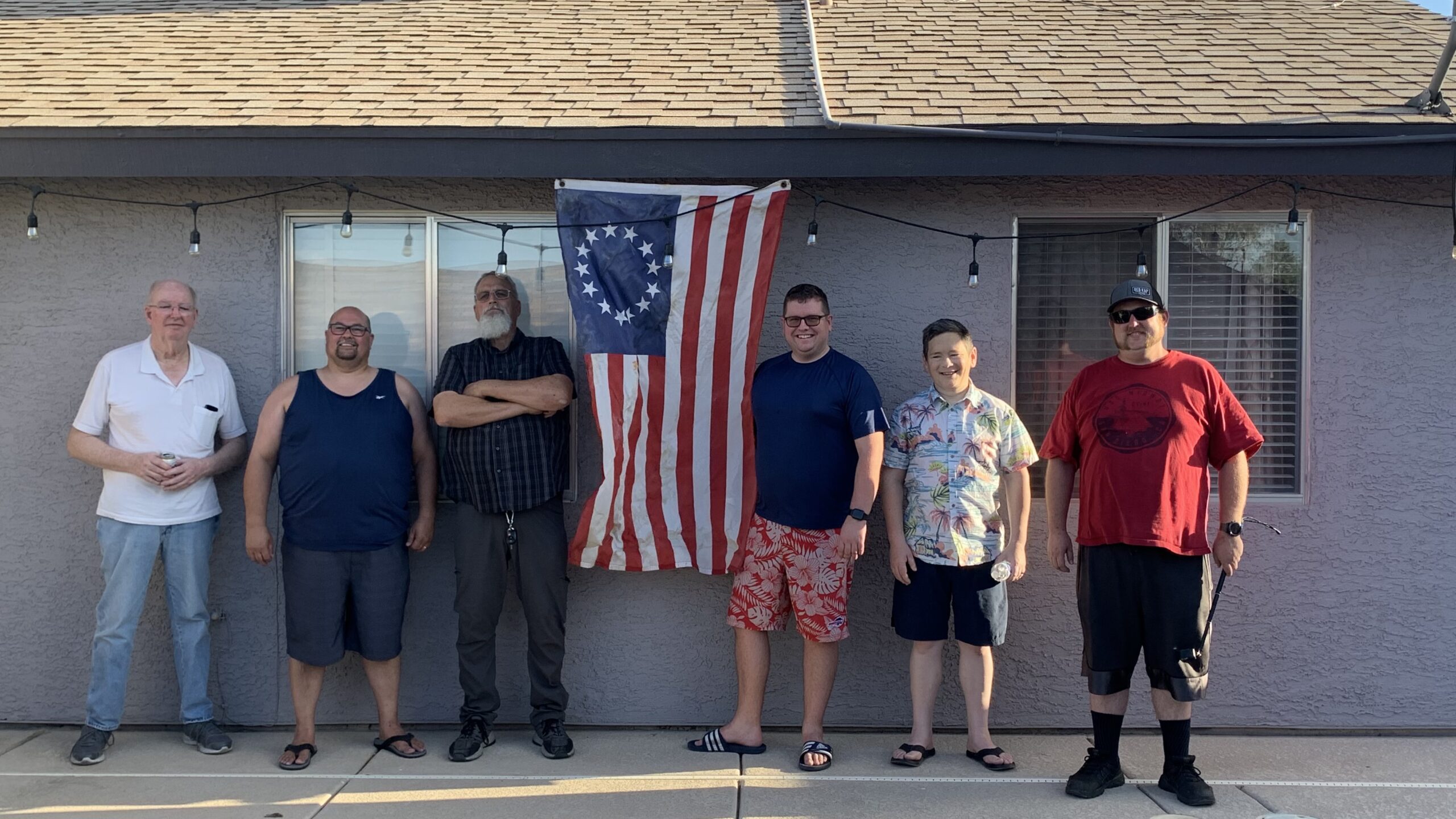
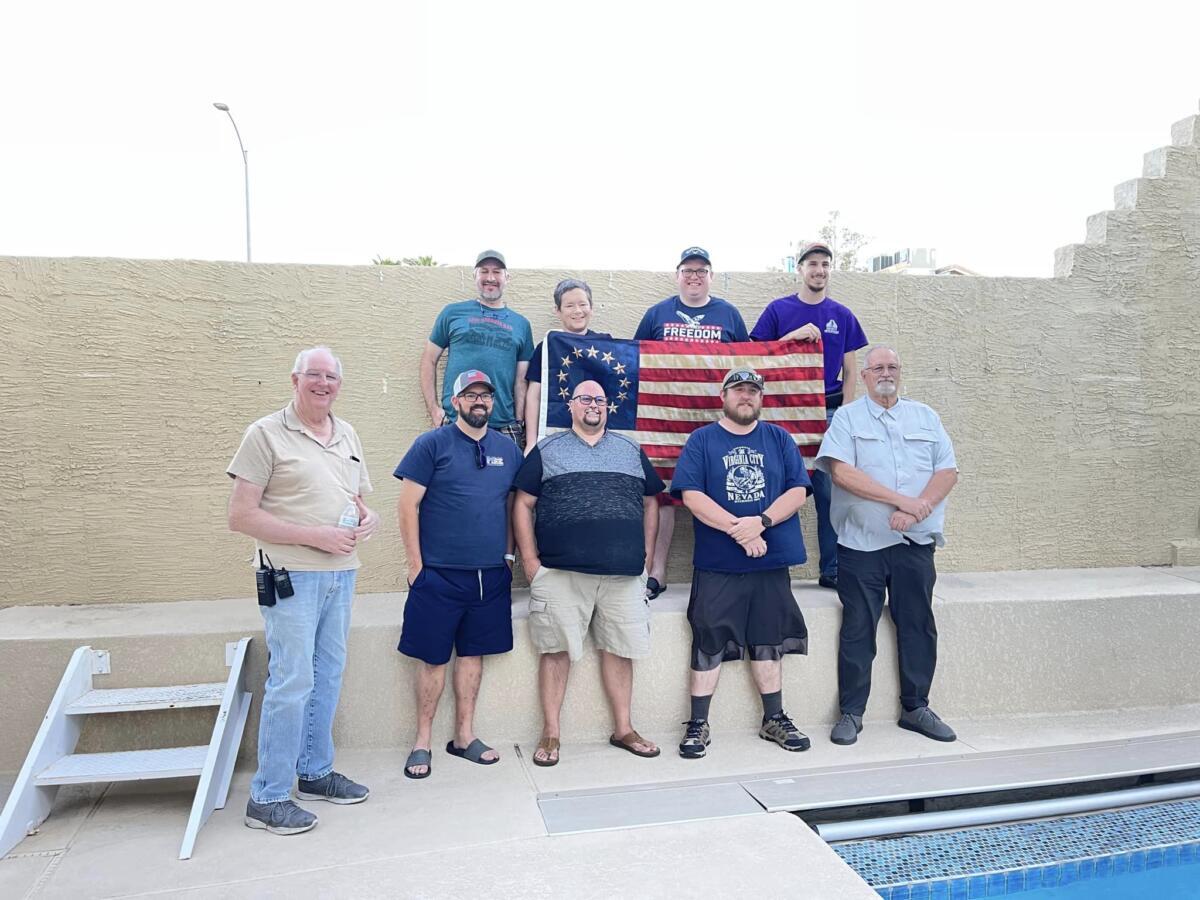
The annual Sin City Independence Day weekend gathering began in 2018 as a pool-and-barbecue tradition involving operators, spouses, significant others, children, food, radio, and friendship.
Chris Ortega KI7VLP began spending time with the group in late 2018 after being introduced socially at breakfast at the Omelet House on Boulder Highway.
By spring 2019, Thursday evening gatherings were becoming regular at Fat Boy in Henderson. The schedule fit a community made up largely of people working full time, attending school, raising families, building careers, or doing several of those things at once.
After Fat Boy closed, Flowing Tide Pub became the principal recurring social gathering place in 2023.
Perhaps unlike other clubs, the family-oriented atmosphere was never established by a committee, policy, or strategic plan. It developed organically because friendships extended beyond radio, spouses became friends, children came along, and people continued showing up even when nothing needed to be repaired.
Sin City Bash
2020–2024
Low Potosi, Angel Peak, Centennial, and a Multi-Site Network
During the disruptions of 2020, repeater activity increased sharply. When normal indoor gatherings became impractical, members adapted with parking-lot gatherings, camping, fishing, and other outdoor activities.
In December 2020, approximately a dozen vehicles participated in the first Christmas-light caravan through Henderson-area neighborhoods.
Sin City 700 at Low Potosi
Late 2020 brought one of the most important infrastructure opportunities in the network’s history. Rob Clark KG6DTL approached Ryan Rodgers N7RMK and Bill Freeman N4NJJ about obtaining communications space at Low Potosi. Through relationships involving Bill Cody K6UHF, now a Silent Key, access was arranged.
The 449.700 MHz frequency was coordinated January 6, 2021. The Sin City system was installed at Low Potosi on January 17.
Chris Ortega KI7VLP and Scott Werber K7RSW were instrumental in getting the equipment racked, mounted, and ready for service, with Scott also contributing tower work.
Members of the Henderson Amateur Radio Club, Inc. W7HEN were still evaluating necessity of the Low Potosi site while the Sin City 700 was actively being installed. The Sin City network was therefore established at Low Potosi five months before the Henderson Amateur Radio Club, Inc. W7HEN placed its own systems there later in late Spring 2021.
The new 449.700 MHz machine became known as the “Sin City 700.”
Scott had occasionally referred to the community around The K as the “K User Group.” With the Sin City 700 on the air, the repeaters, technical projects, friendships, and operators increasingly needed a collective identity.
In January 2021, the name Sin City Repeater Group began to take shape.
Angel Peak and the Sin City 325
Permission for amateur radio equipment at Angel Peak was obtained in February 2021. The frequency for the 448.325 MHz Sin City 325 was coordinated May 19, 2021.
Scott K7RSW performed electrical work inside the communications building to improve the facility’s ability to support additional amateur radio installations.
In December 2021, the Sin City 325 went on the air from Angel Peak.
Sin City Repeater Group established its amateur radio infrastructure at Angel Peak well before the Henderson Amateur Radio Club, Inc. W7HEN later established equipment at the site following an eviction from the Apex Communications Site just north of Las Vegas.
The network that had begun with a relatively modest Henderson installation in 2014 now included substantial mountaintop infrastructure overlooking Southern Nevada.
Centennial
On September 1, 2022, the Centennial systems went live, extending capability across VHF, UHF, and 900 MHz.
Motorola Quantar equipment remained central to several of the installations. Harry Hyter K7THB donated the 900 MHz Station Master antenna.
A new two-meter frequency, 147.210 MHz, was coordinated December 7, 2023.
For a current list of operating repeaters, frequencies, locations, and modes, visit the Active, On-Air Las Vegas Repeater List .
Connections beyond Las Vegas
BARRA, Western New York, and the Wider Amateur Radio Community
The Western New York relationship never disappeared from the Sin City story.
Jeremy N2UGS entered the group’s wider circle in December 2020 through Ross KB2TIN.
In January 2024, Jeremy received permission from the Buffalo Amateur Radio Repeater Association to add AllStar connectivity to the WA2HKS 444.000 MHz system.
The BARRA relationship strengthened a Las Vegas-Western New York connection that had already existed for nearly a decade.
For operators with family, friendships, and personal histories in Buffalo, Rochester, and Southern Ontario, the link represented more than an engineering exercise. Amateur radio kept distant communities connected.
Sin City Repeater Group members have also contributed extensively across organizational boundaries in Southern Nevada.
Dan W7IVK served approximately a year and a half as technical net director for the Henderson Amateur Radio Club, Inc.
Bill N4NJJ served two years as president of the Henderson Amateur Radio Club, Inc. and continues to serve on its board as past president.
Sin City Repeater Group Treasurer Rey AK7RF also serves as President of NA7LV .
The objective has never been to build walls between organizations. It has been to build radio, activity, knowledge, and community.
2025–2026
Formalizing What Had Already Been Built
The legal organization is younger than the network. That distinction is essential to understanding the history.
For most of its existence, there was no corporation called Sin City Repeater Group. There was a repeater network, a community of operators, shared technical projects, recurring traditions, and years of operating history.
On September 2, 2025, Sin City Repeater Group became an ARRL-affiliated amateur radio organization.
That same month, Bill N4NJJ created the primary Sin City Repeater Group logo. The design was intended to communicate Las Vegas without depending on a skyline that changes every time another recognizable building is reconstructed or demolished.
Bill N4NJJ’s term as president of the Henderson Amateur Radio Club, Inc. concluded at noon on December 31, 2025.
Later that day, after that term had formally concluded and to avoid any potential conflict of interest or institutional overlap, Sin City Repeater Group formally incorporated as a Nevada Chapter 82 nonprofit corporation.
The original corporate leadership included Bill N4NJJ, Chris Ortega KI7VLP, Dan W7IVK, and Rey AK7RF.
On March 12, 2026, the Internal Revenue Service recognized Sin City Repeater Group, Inc. as a tax-exempt organization under Section 501(c)(3).
ARRL Contest Club status followed on June 18, 2026.
Shane Wetzstein WS7EMA became the organization’s first formal paid member on June 22.
Field Day 2026: KM7GQZ
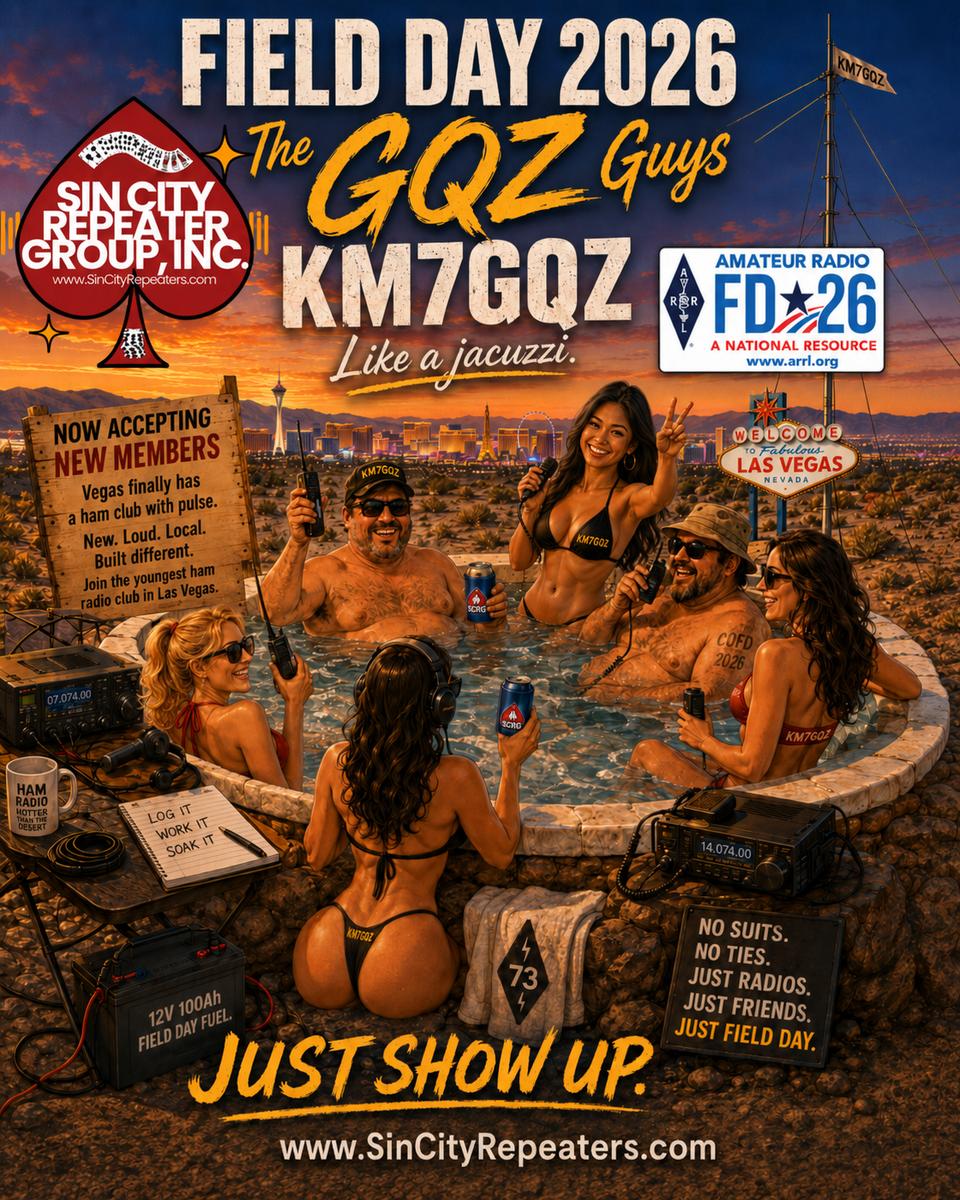
The organization’s first club callsign, KM7GQZ, arrived during Field Day week.
Sin City Repeater Group operated QRP during ARRL Field Day 2026 as KM7GQZ, leaning into the memorable suffix with the intentionally irreverent “GQZ Guys” and “like a jacuzzi” campaign.
The event reflected several parts of the organization’s culture at once: low-power operating, experimentation, humor, informal fellowship, and a willingness to make amateur radio visible.
On August 18, 2026, the organization received the vanity callsign W7RPT.
Formal membership grew approximately 200 percent between the end of June and the end of September.
On September 13, 2026, club member John McGrath N9AMI transferred TGIF talkgroup 1952 to Sin City Repeater Group, opening another technical chapter in the organization’s developing DMR infrastructure.
ARRL Special Service Club
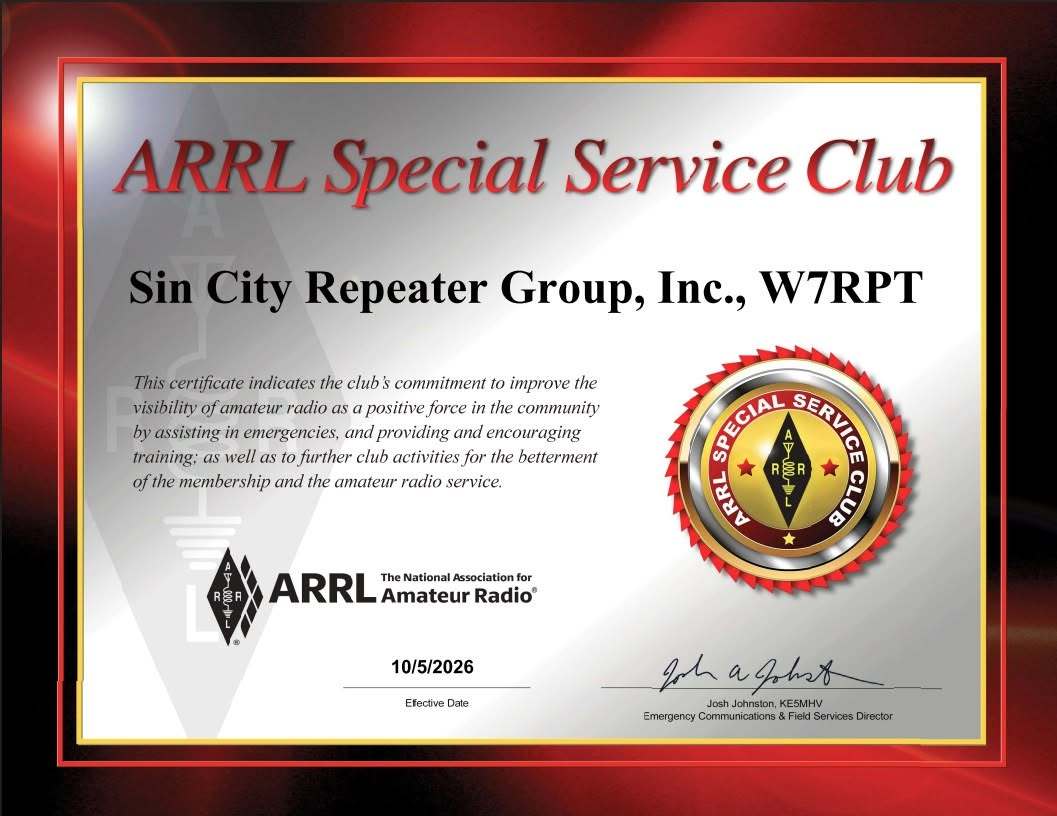
The ARRL designated Sin City Repeater Group, Inc. W7RPT as a Special Service Club, recognizing the organization’s commitment to amateur radio visibility, community service, training, emergency communications, and activities that strengthen amateur radio.
It was another institutional milestone for a technical and social community whose operating history was already more than a decade old.
Operating, teaching, and showing up
Sin City Repeater Group Today
Formal organization did not change the basic expectation that an amateur radio organization should actually do amateur radio.
Youth and STEM Outreach
A Civil Air Patrol demonstration placed approximately 55 cadets behind microphones for their first amateur radio contacts, continuing an outreach tradition that reaches back to the 2015 Scout demonstration.
KXNT-AM
Members were invited by Audacy Las Vegas Chief Engineer Tracy Teagarden to operate from the KXNT-AM transmitter site before the historic towers were demolished. Operations included 160, 80, and 40 meters.
K7F Special Events
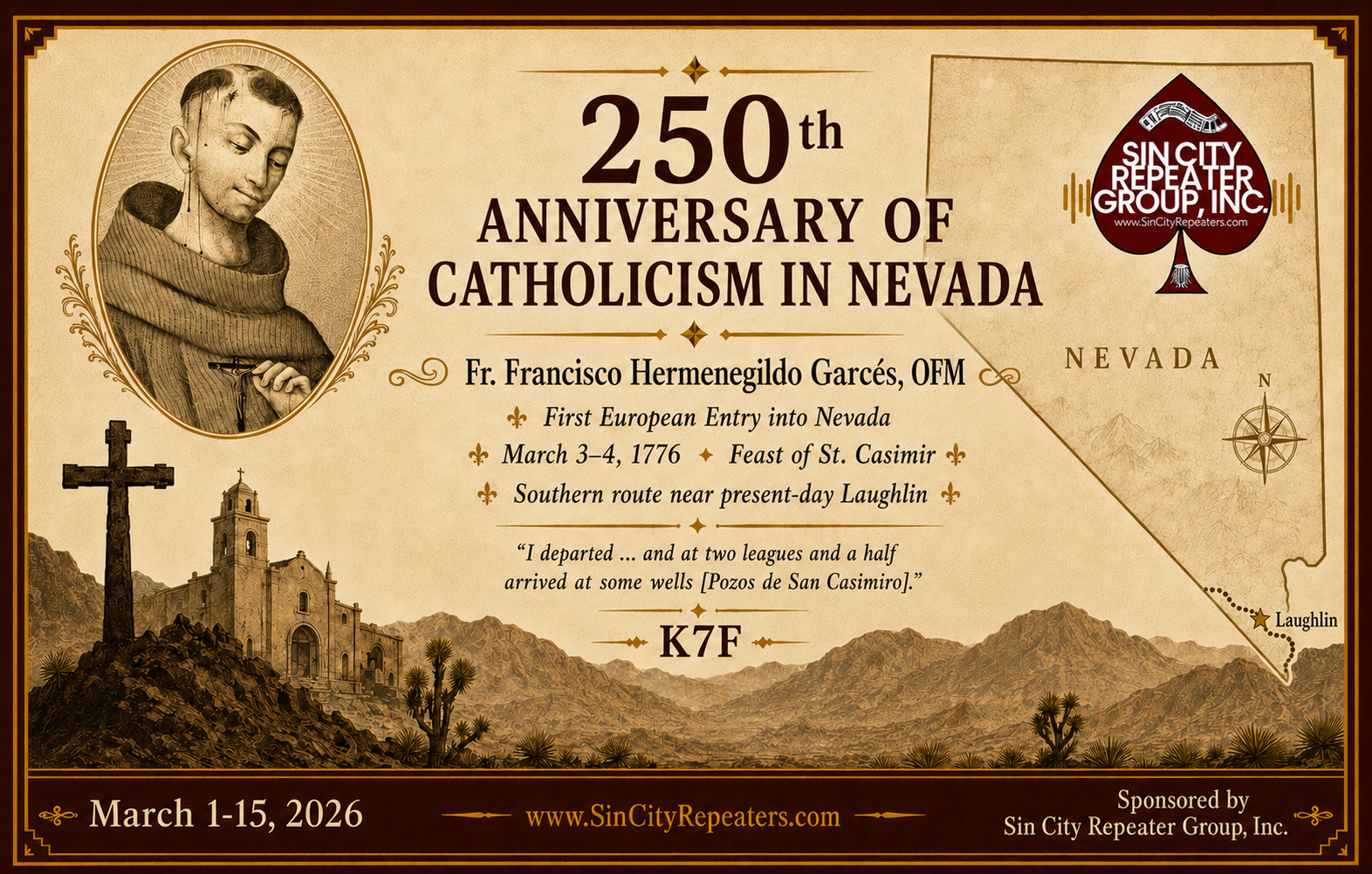
The K7F Garces expedition generated 2,411 contacts, reaching all 50 states and 53 DXCC entities across eight bands and three modes. Another K7F operation commemorated St. Maximilian Kolbe.
Community Events
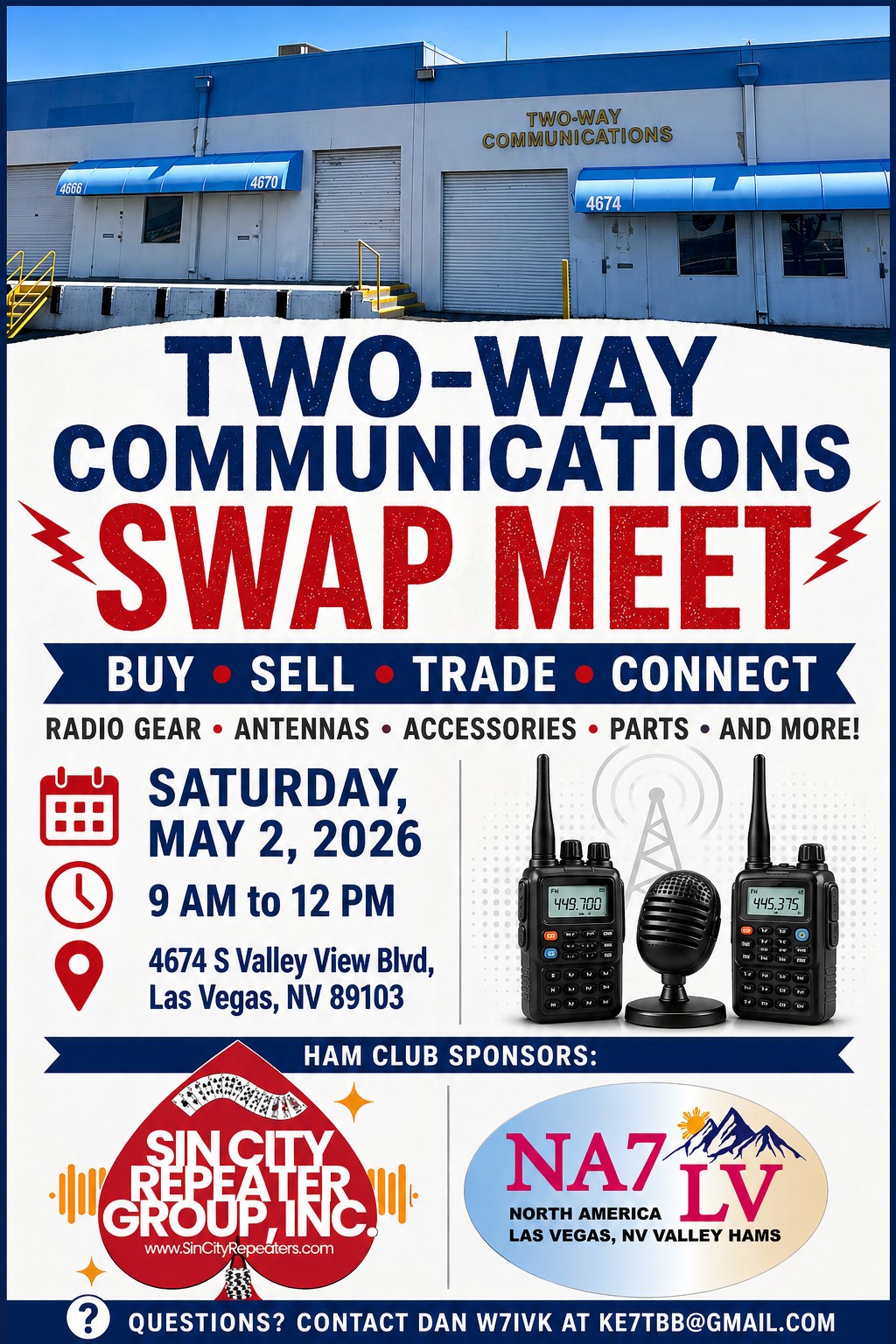
Members have supported the Silver State Car Classic, conventions, demonstrations, swap meets, technical projects, public-service activities, and other amateur radio organizations.
More Than a Repeater List
Members bring spouses and children. They meet for dinner when nothing is broken. They go camping, fishing, and off-roading. They hold barbecues, happy hours, holiday activities, operating events, and technical work days.
New operators may encounter W7RPT through a repeater, LasVegasHamRadio.com, an operating event, a convention, or a public demonstration. Many become part of the community through something simpler: somebody taking the time to help them get started.
Las Vegas Ham Radio Since 2014
The network that became Sin City Repeater Group began with a used Motorola GR1225 in Henderson in 2014. It expanded into AllStar, connected Las Vegas with Western New York, experimented with P25, 420 MHz, 900 MHz, and commercial-grade repeater infrastructure, and eventually moved onto major Southern Nevada mountaintop sites.
The name came in 2021. ARRL affiliation and incorporation came in 2025. IRS recognition, formal membership, W7RPT, and Special Service Club status came in 2026.
Those milestones did not create Sin City Repeater Group. They formalized more than a decade of operating, building, experimentation, friendship, and community.
The machines matter. The network matters. The people are why it exists.
The next chapter is being written now
Join the Club. Join the Movement.
Sin City Repeater Group was built by people who showed up, experimented, helped one another, used the repeaters, brought friends and family, and refused to let amateur radio become something that only happened at meetings. If that sounds like your kind of radio club, there is a place for you here.